Mexico City, Mexico
TEMPLE OF EHÉCATL-QUETZALCÓATL
A pre-Hispanic sanctuary of the wind god, preserved beneath the foundations of our hotel
As featured in
Smithsonian Magazine · Food & Pleasure · La Nueva España · La Jornada · El Economista
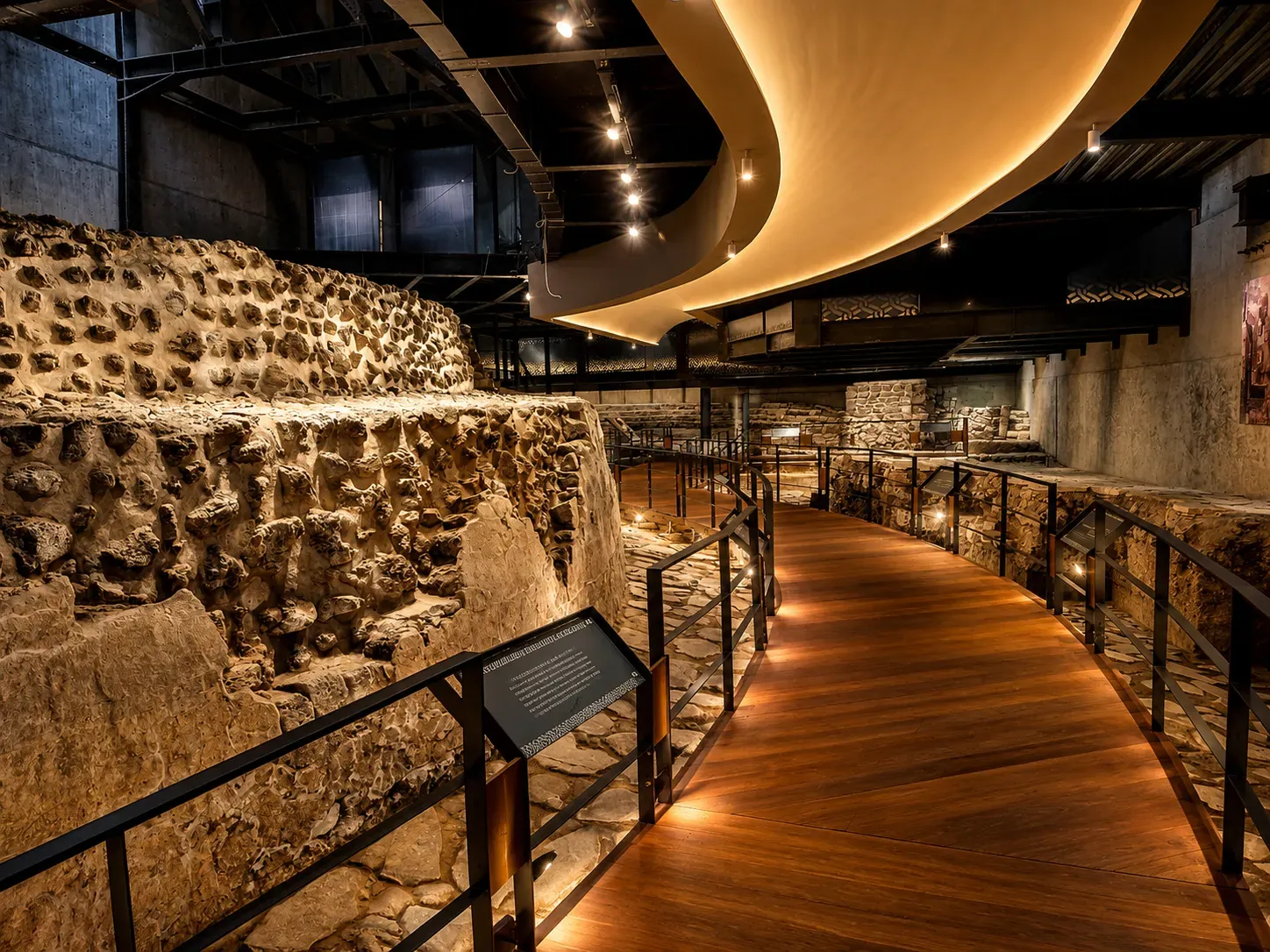
Beneath the foundations of Hotel Catedral lies one of the most fascinating archaeological discoveries in Mexico City's Historic Center: a circular temple dedicated to Ehécatl, the Mexica deity of wind, an aspect of Quetzalcóatl, the Feathered Serpent. This vestige of Mexico's pre-Hispanic past represents a tangible connection to the grandeur of Tenochtitlan.
Ehécatl - Dios del Viento
HISTORY OF THE TEMPLE
The Temple of Ehécatl-Quetzalcóatl was built during the height of the Mexica Empire, approximately between 1400 and 1500 AD. As part of the sacred precinct of Tenochtitlan, this circular temple was dedicated to Ehécatl, the god of wind, who according to Mexica cosmogony was responsible for sweeping the skies to make way for Tláloc's rains.
The circular shape of the temple is characteristic of sanctuaries dedicated to Ehécatl, as it symbolizes the unobstructed movement of the wind. This unique architecture allowed the wind to flow freely around the structure, thus honoring the nature of the god to whom it was consecrated.
Ehécatl was depicted wearing a beak-shaped mouth mask, through which he blew the wind. As an aspect of Quetzalcóatl, the Feathered Serpent, Ehécatl represented the celestial and ethereal aspect of this fundamental deity in the Mesoamerican worldview.
After the Spanish conquest in 1521, the temple was buried under the rubble from the destruction of Tenochtitlan and later beneath colonial constructions. For centuries, this archaeological treasure remained hidden, waiting to be rediscovered.
THE REDISCOVERY
The discovery of the Temple of Ehécatl-Quetzalcóatl occurred during excavation and foundation work in the Historic Center. Archaeologists from the National Institute of Anthropology and History (INAH) carefully documented the circular structure, revealing its historical importance.
The excavations revealed the circular walls characteristic of temples dedicated to Ehécatl, as well as various ceremonial artifacts confirming the sacred nature of the site. Among the findings were ritual offerings, ceramic fragments, and original architectural elements.
1400-1500 AD
Construction of the temple during the height of the Mexica Empire as part of Tenochtitlan's ceremonial precinct.
1521
Fall of Tenochtitlan and gradual destruction of pre-Hispanic temples during the Spanish conquest.
COLONIAL ERA
The temple becomes buried beneath successive colonial constructions in the Historic Center.
21ST CENTURY
Discovery during salvage archaeological excavations in the area.
PRESENT DAY
The temple remains preserved beneath Hotel Catedral, a testament to the living history of the city.
Corte Transversal Arqueológico
CULTURAL SIGNIFICANCE
The Temple of Ehécatl-Quetzalcóatl represents much more than an archaeological vestige; it is a symbol of Mexico's cultural continuity and the coexistence between the pre-Hispanic past and the present. Its preservation beneath Hotel Catedral allows guests to experience a unique connection with Mexico City's millennial history.
The temple's location within the ancient sacred precinct of Tenochtitlan places it at the spiritual heart of the former Mexica capital. This area housed the empire's most important temples, including the Templo Mayor, dedicated to Huitzilopochtli and Tláloc.
CIRCULAR ARCHITECTURE
The circular floor plan of the temple is unique to sanctuaries dedicated to Ehécatl, designed to allow wind to flow unobstructed, honoring the nature of the wind god.
MEXICA WORLDVIEW
Ehécatl played a crucial role in the Mexica agricultural cycle, preparing the way for the rains that nourish the earth. His worship was intimately linked to the survival of civilization.
LIVING HERITAGE
The preservation of the temple beneath the hotel represents a model of coexistence between urban development and archaeological heritage conservation.
CONNECTION TO QUETZALCÓATL
As an aspect of the Feathered Serpent, Ehécatl connects this site with one of Mesoamerica's most important deities, worshipped since Olmec times.
“The past can coexist with the present in harmony.”
— Raúl Barrera Rodríguez, Director of the Urban Archaeology Program, INAH
VISIT THE TEMPLE
Hotel Catedral lets you stay above Mexico's history. The temple can be seen throughout the Pyramid Tower lobby, with glass flooring that frames the circular remains.
IN THE PRESS
Smithsonian Magazine, Food & Pleasure, La Nueva España, La Jornada, and El Economista have written about the hotel and the temple under the lobby. From the Pyramid Tower glass floor you can see the remains; the underground museum with guided visits is run by INAH on the same property.
See moreBLOG GUIDE
Temple history, how it is seen from the glass-floor lobby, how this site differs from Templo Mayor, and how to book in the Historic Center.
READ THE FULL GUIDEStay above the living history of Mexico
As featured in
Smithsonian Magazine · Food & Pleasure · La Nueva España · La Jornada · El Economista